
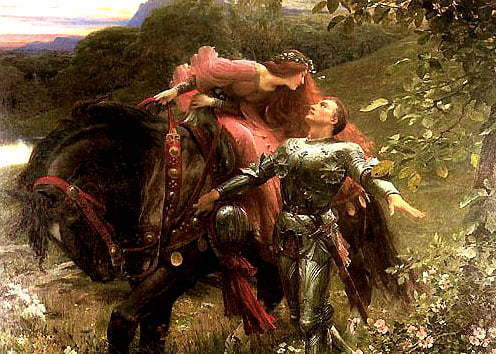
In medieval poems, knights pledge vows of eternal love to innocent noble maidens, their doe eyes quick to mist and never to anger. Chivalry as an ideal is ingrained in our society. Images of handsome men with chiseled jawlines in shining armor swearing fealty to lords, fighting honorably, and respecting the “weak” (translation: women and children) abound.
Sadly, the truth is never as nice as our fancies. Ancient writers skipped the gritty details.
The term “chivalry” comes from the French word for soldiers on horses. The romanticization of these guys began in the good old 1100s, and the concept is as outdated as, well, the date.
There’s a lot of debate about the historical realities and poetical exaggerations surrounding the chivalric code, but the concept’s influence is undeniable. Western society is familiar with a knight’s duty to all women: respecting them. Which seems pretty basic, right?
Not really. It’s about as sexist an idea as they come, and not just because it places women on a Virgin Mary pedestal. The other two duties of a knight are respecting his lord and God, which, surprisingly enough*, don’t result in nearly as much drama.
*Note: Not actually a surprise.
These duties, according to the chivalric code, spawned the idea of courtly love: knights going on honorable quests, serving the kingdom, and doing other stereotypically knightly things to win a noble lady’s favor. Courtly love, as most idealistic, utopian things do, began as a literary concept. Things work in the literary world because authors make them work within context. What began as entertainment for the rich and easily bored seeped into reality. Though accounts differ regarding practices, courtly love became a game in the Middle Ages. It was termed “loving nobly,” and it was anything but.
In the ideal plane (where Plato’s perfect chair lives), loving nobly is practicing restraint. Knights aren’t supposed to be carnal, except when they’re out killing things. But they’re not always out killing things. They need to be respectable members of society, and everyone knows men are carnal hot-blooded killing beast machines incapable of controlling themselves*.
*Note: More nonsense.
The struggle between human desires and spiritual perfection is the aim of the game. In basic terms, knights showed how awesome they were by refraining from physical love and spouting romantic verses about purity and fidelity and innocent devotion to their lord, God, and, of course, their pure lady.
In the real plane, where people are weak and ruled by base emotions, knights found outlets outside of war. They were boys with swords and wars. And when there were no wars, they were still boys with swords. They bent the rules to suit themselves. Noble women were the recipients of courtly love and some modicum of respect, with the expectation that they were gossamer creatures who would virtuously reject all advances. A knight could be as flirtatious and love as nobly as he liked with nobles.
Peasant women, however, weren’t really ladies. Peasant women became objects of systemic abuse beyond the usual toils of serfdom. Knights tended to go out pillage, which usually involves sexual violence. The one classic image that rings true is that of knights attacking villages without fear of repercussion. Peasants aren’t noble, so they’re not people. Right?
So. Chivalry. Not so great after all. Be sus of any guy who wants to restore chivalry to the world. Aside from the probability that he’s an egomaniacal Nice Guy™, you know what chivalry really entails. And no, the chivalric ideal doesn’t get a pass. It’s founded on the idea that women are passive idols, existing as receptacles for superior male worship.


